Looking Back at Thrive in 5 Boston
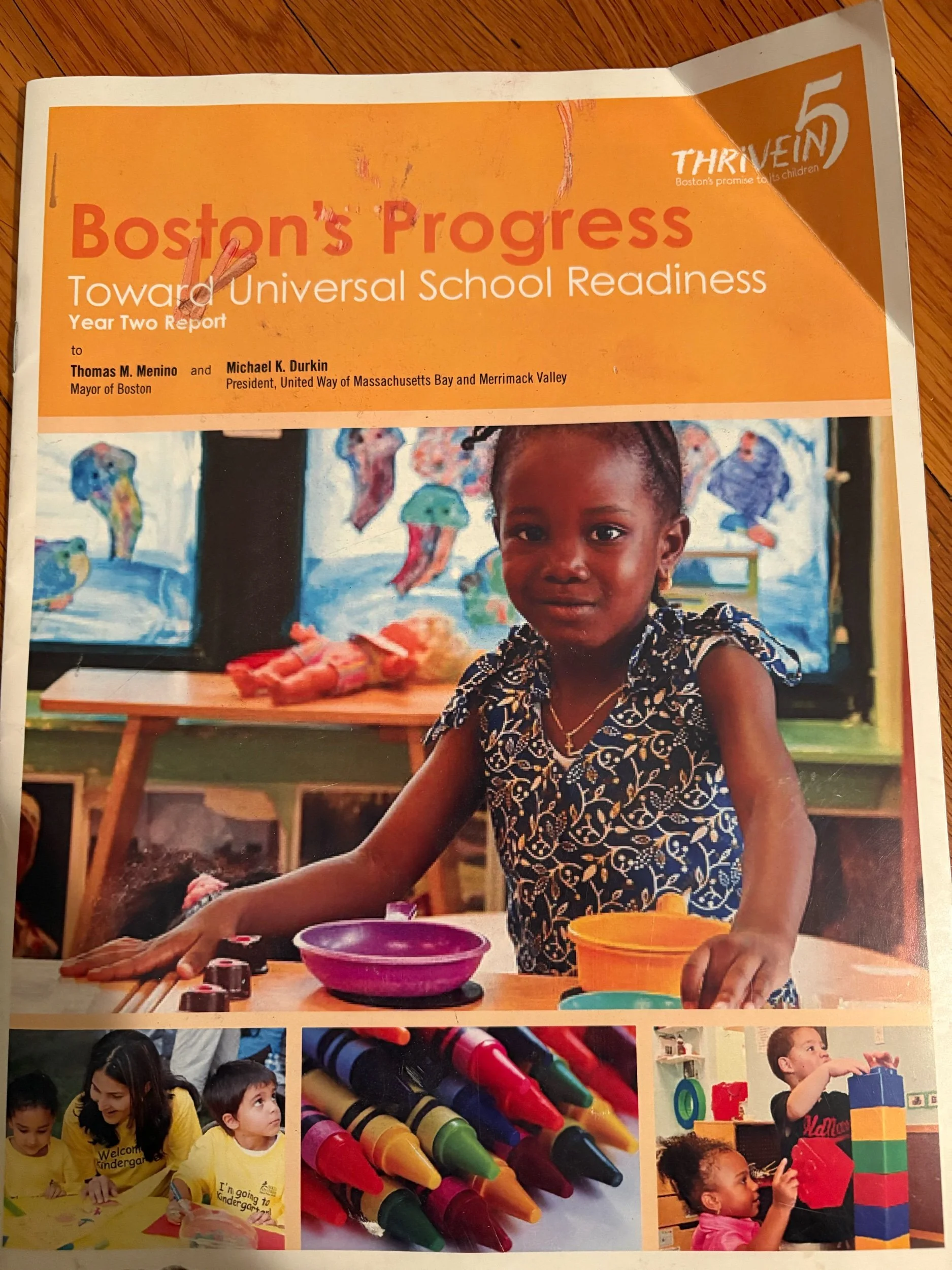
Having spent the last 20 years going to dozens of Early Education and Care (EEC) events across the Boston area, I’ve had a front-row seat to how our field evolves. It’s always a trip to look back because you realize that while the faces and the office titles change, the heart of what we’re trying to do for kids in this city stays remarkably consistent. Sometimes I’m struck by how much we’ve progressed, and other times I’m reminded of just how persistent the old challenges are. Case in point: I was digging through some old files recently and found a report from a "Thrive in 5 Boston" conference I attended back in April 2011. It’s a fascinating snapshot of a specific moment in Boston’s early ed history.
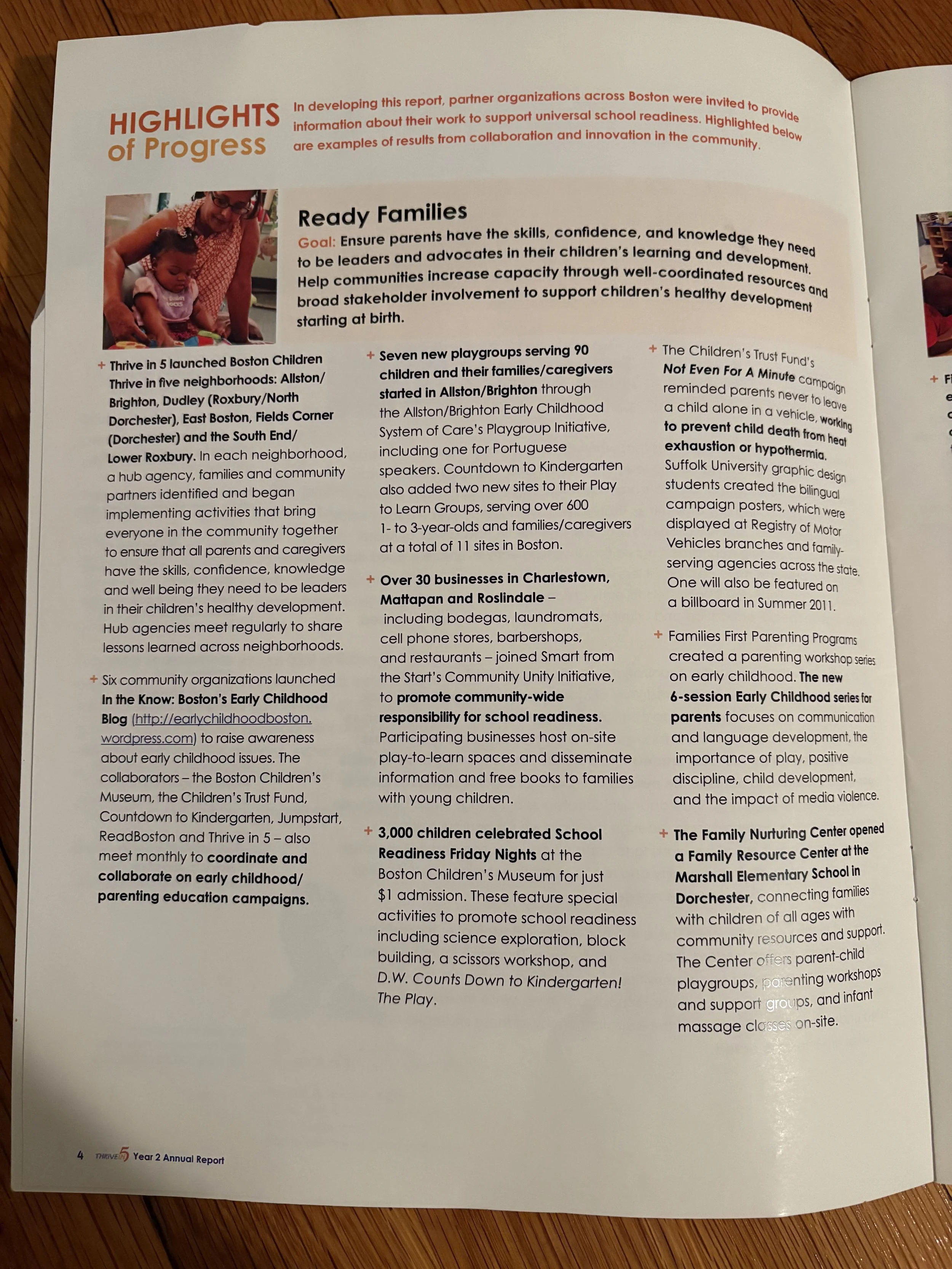
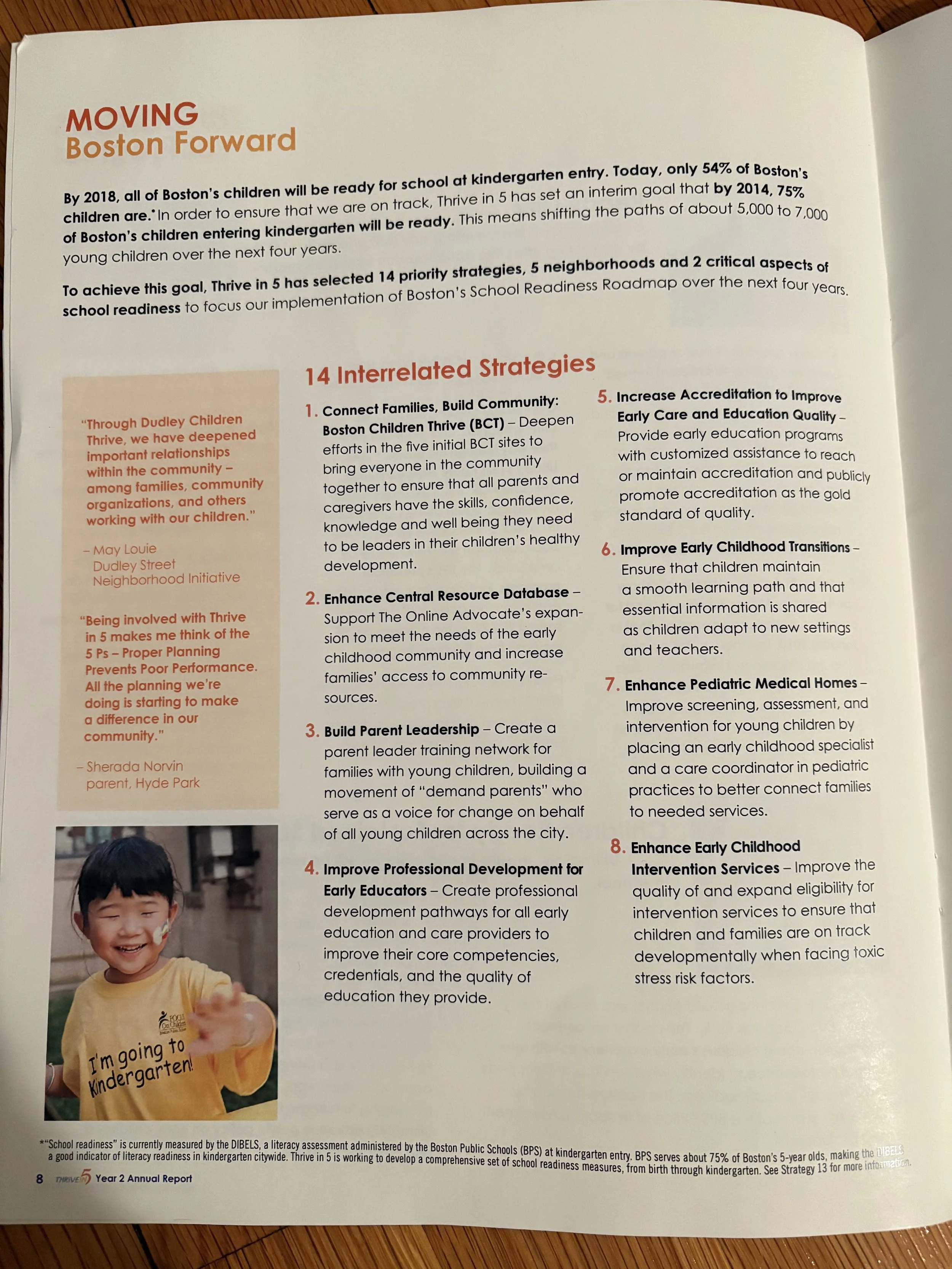
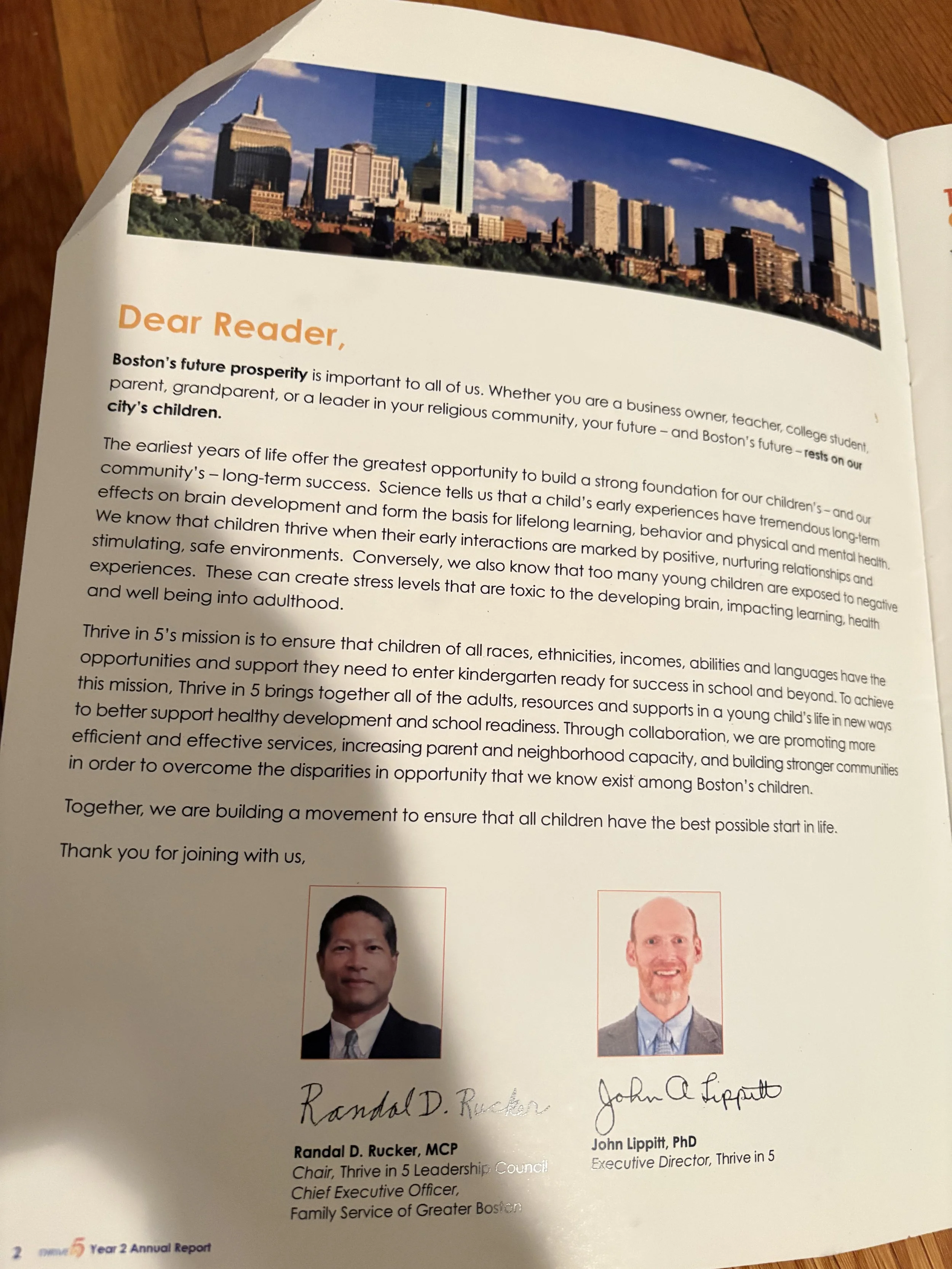
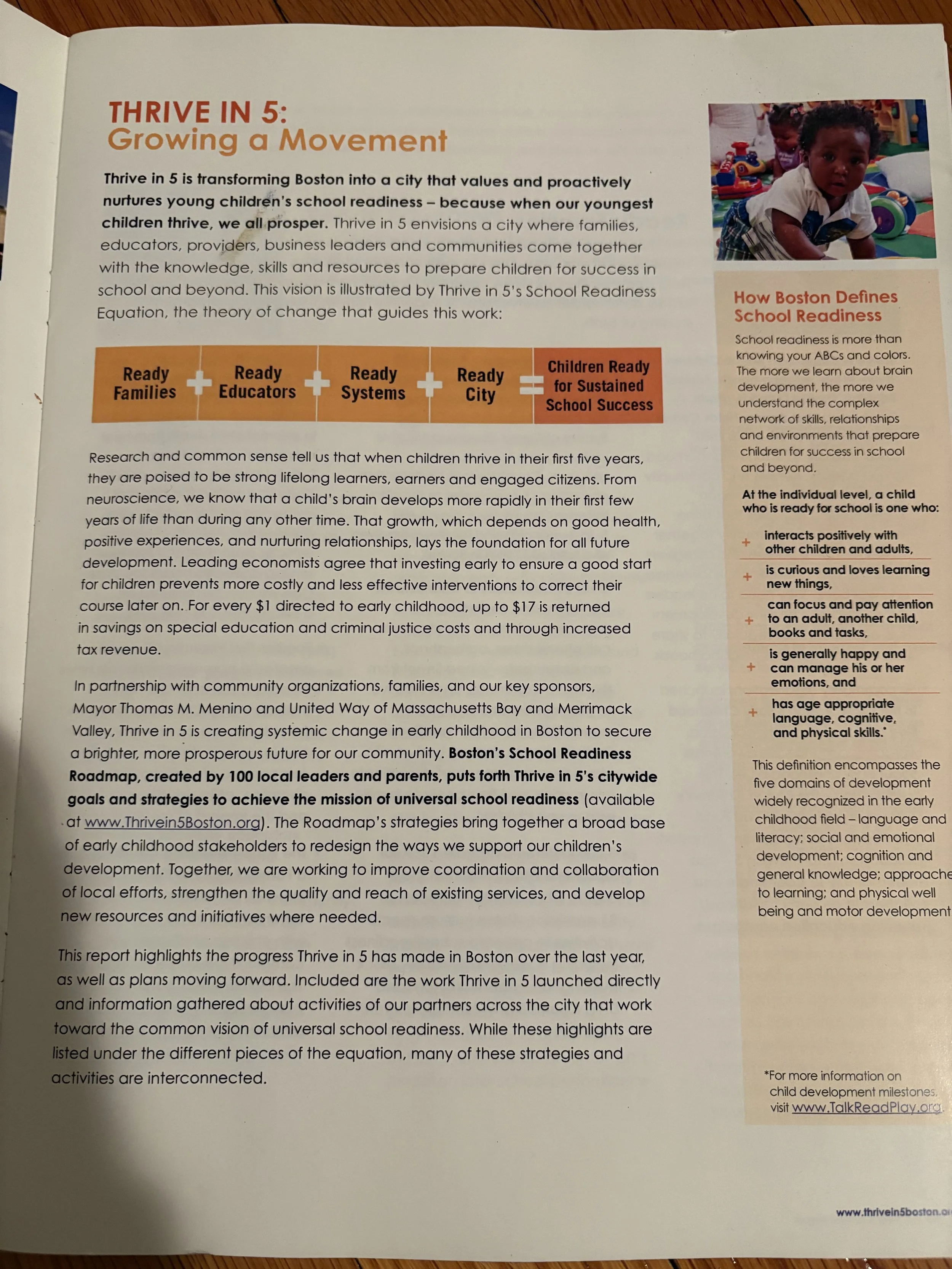
Looking at the photos from that 2011 report (see below), you can see that Thrive in 5 was really the primary engine for citywide early childhood strategy at the time. It was a partnership between the City of Boston and the United Way of Massachusetts Bay, functioning as what we call a "backbone organization." Their goal back then was incredibly ambitious: they wanted 100% of Boston’s children to be school-ready by 2018. When the report was written, only 54% of kids were hitting that mark, so they were looking to change the trajectory for about 5,000 to 7,000 children every year.
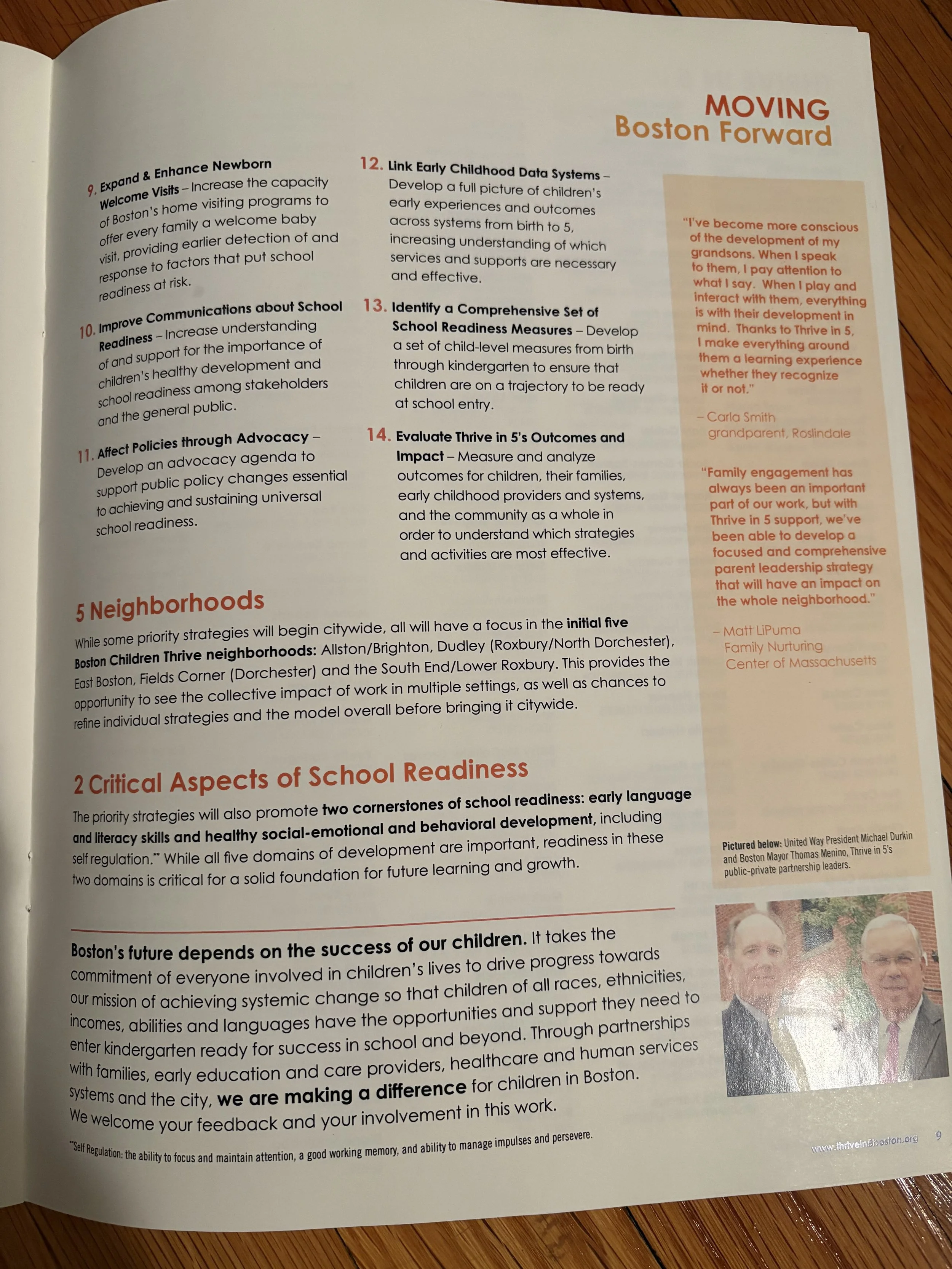
The report highlights something they called the "School Readiness Roadmap." This wasn't just some vague document; it was a strategic plan built with input from 65 community leaders and over 30 parents. Back in 2011, the focus was centered on three big ideas: deepening family engagement, making developmental screenings universal, and pushing for better quality across all early education providers. It’s the kind of comprehensive thinking that laid the groundwork for everything we’re doing now.
The photos also show the "Boston Children Thrive" (BCT) model, which was being tested in five "hub" neighborhoods: Roxbury, East Boston, Fields Corner, Allston-Brighton, and the South End. These were the spots where the real work was happening—think "Welcome Baby" visits and neighborhood playgroups. The idea was to stop expecting families to come to us and instead bring the resources to the places where they actually live and play. It was about creating a sense of community ownership over early childhood success.
In 2011, Thrive in 5 was also obsessed with the "science of readiness." They were tracking five specific domains: language development, cognition, approaches to learning, social-emotional health, and physical well-being. They were using tools like the DIBELS literacy assessment to catch kids who were falling behind. It was an early effort to create a data-driven system that could flag developmental delays long before a child ever set foot in a BPS kindergarten classroom.
One thing that really stands out in the report is the emphasis on "Parent Leadership." There’s a strong belief in these pages that parents are a child's first and most important teacher. By 2011, they had a solid community of parent representatives from all over the city who met regularly to share what was working on the ground. It’s a reminder that good early ed policy isn't something that should be done to families—it has to be built with them at the table.
The report also dives into the "Quality Improvement" work they were doing with educators. Thrive in 5 was trying to bridge the gap between community-based preschools and the Boston Public Schools. They wanted to make sure that whether a kid was in a private center or a public pre-K, they were getting the same high-quality, evidence-based instruction. That meant a lot of coaching and professional development for a workforce that, as we know, has always been undervalued and underpaid.
Collaboration is the theme that jumps off the page in the 2011 report. You see a list of partners that includes everyone from the Boston Children’s Museum to the Family Nurturing Center. It was a time of building logic models and trying to get every stakeholder in the city to agree on what "readiness" actually looked like. That conference in April 2011 was full of that collective energy—everyone feeling like we were on the verge of finally closing the achievement gap by starting at the very beginning.
Looking at these photos now, I’m reminded of just how much effort it takes to move the needle. While Thrive in 5 eventually sunsetted, it didn't just disappear. The blueprint they created in the past provided the foundation for the next decade of advocacy. It was a necessary chapter in Boston’s ECE story, and it's cool to see how those old ideas have been refined and scaled up in the years since.
The legacy of Thrive in 5 is very much alive today in the work being done at City Hall. In 2022, Mayor Michelle Wu launched the Boston Office of Early Childhood, which in many ways is the permanent, government-backed version of what Thrive in 5 was trying to do. It’s the "citywide backbone" we always dreamed of. From the massive $20 million expansion of Universal Pre-K to the focus on supporting the early ed workforce, the spirit of that 2011 conference is still driving the agenda. It’s taken time, and the work is never really "done," but seeing where we were then makes me even more motivated for what we're doing now.