🕰️ A Look Back: Early Childhood Education and Playgrounds in 1925 Watertown
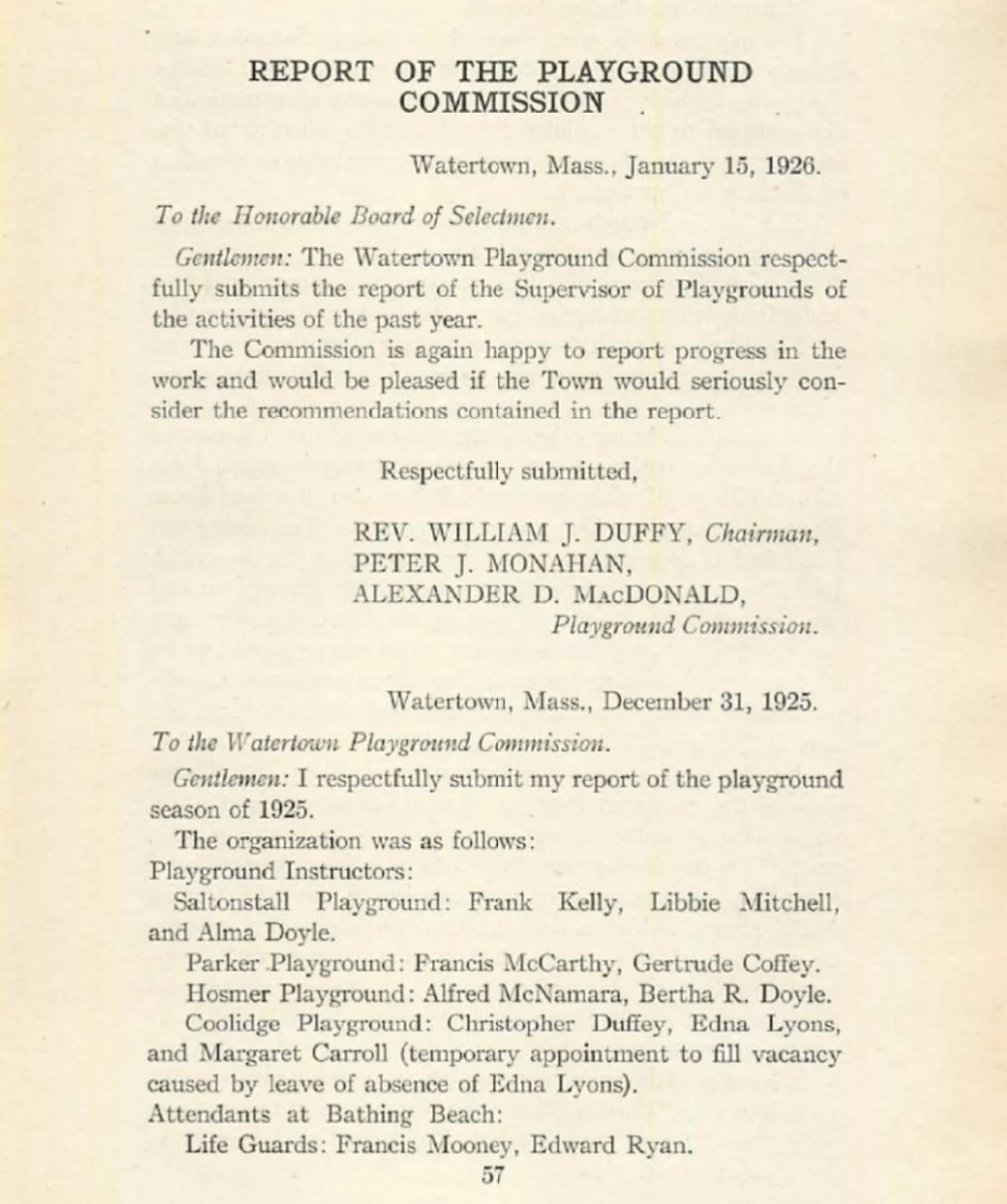
When considering the evolution of early childhood education (ECE) in modern times, reviewing primary source documents from the past offers valuable insight into how practices and priorities have changed. Playgrounds are a crucial component of ECE, and a recent discovery in The Watertown 1925 Annual Report—specifically, the report from The Watertown Playground Commission—sheds light on the town's focus on structured recreation nearly a century ago.
🌟 Key Highlights from the 1925 Playground Commission Report
Here are some of the principal details from the Playground Supervisor's report to the town:
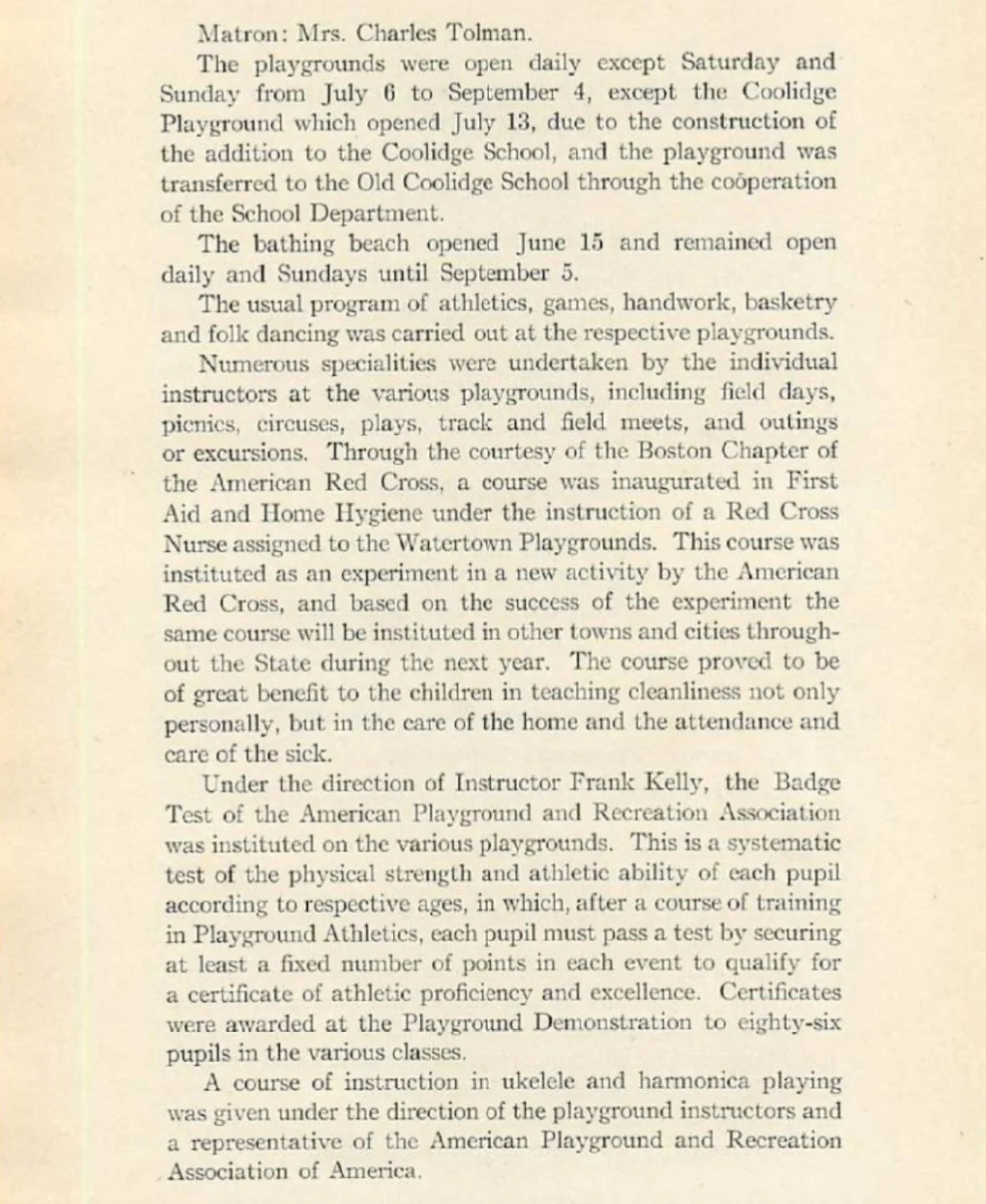
• Summer Programs: Multiple playgrounds operated daily throughout the summer, with dedicated instructors leading athletics, games, dances, and special events such as field days, picnics, circuses, and plays.
• Health and Safety: A new Red Cross course in First Aid and Home Hygiene was introduced. It proved highly beneficial and was expected to expand statewide.
• Physical Assessment: The Badge Test of the American Playground and Recreation Association was used to measure children’s physical development, resulting in eighty-six participants receiving certificates.
• New Activities: Music instruction in ukulele and harmonica was added to the program offerings.
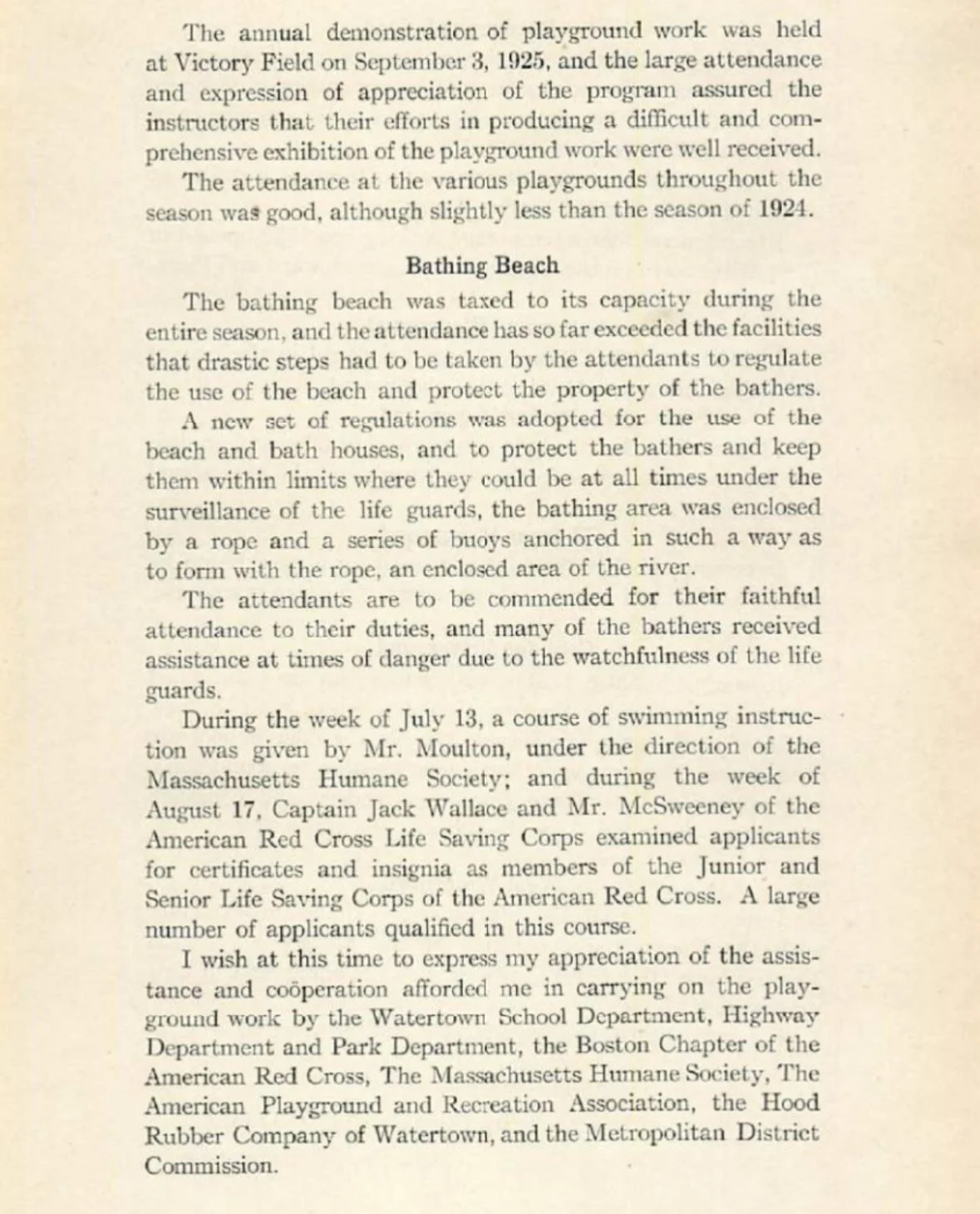
• Bathing Beach: The local bathing beach saw exceptionally high attendance, prompting the implementation of new safety regulations and earning praise for the vigilant life guards. Additional water programs included swimming instruction and Red Cross lifesaving exams.
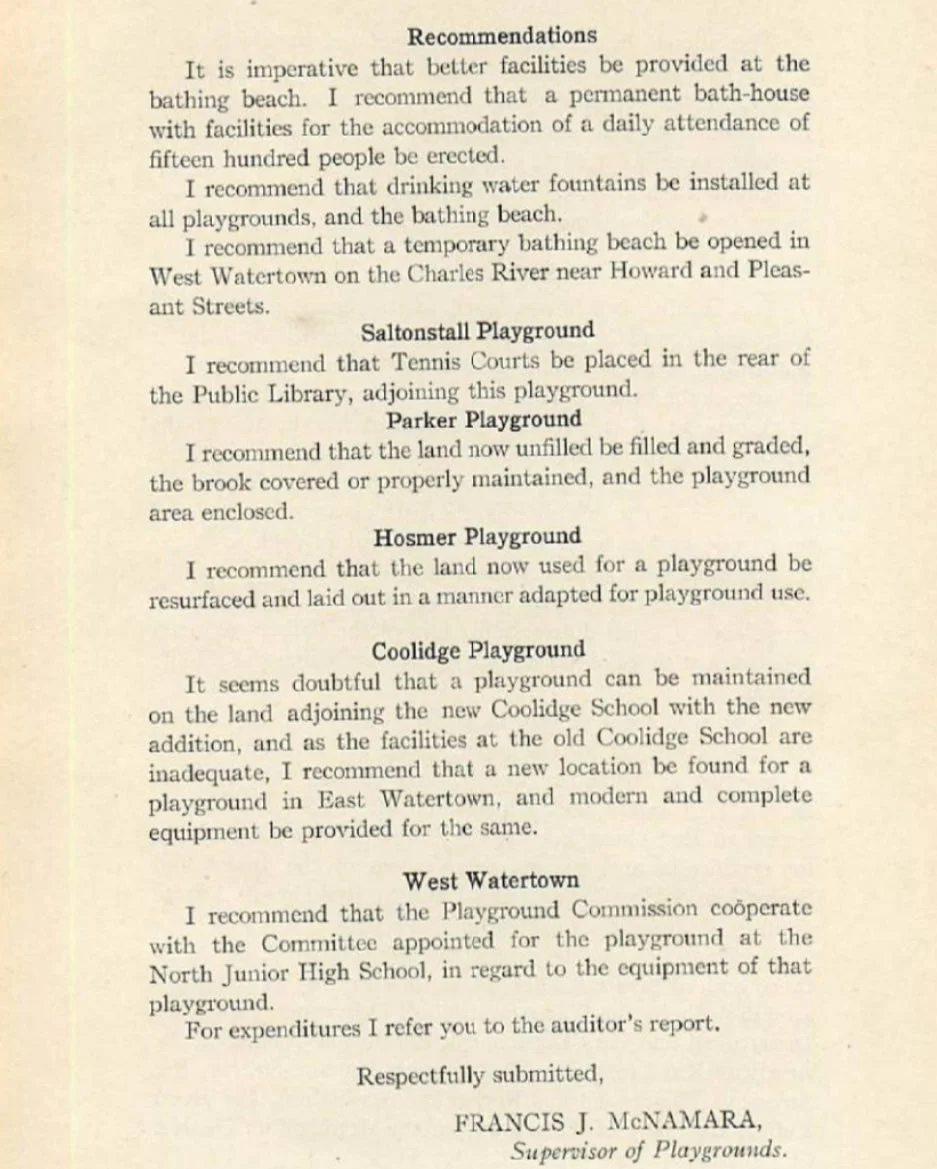
📝 Key Recommendations from the 1925 Watertown Playground Supervisor’s Report
Supervisor Francis J. McNamara's report urgently requested major infrastructure improvements to the town's recreational facilities:
Supervisor Francis J. McNamara's report urgently requested major infrastructure improvements to the town's recreational facilities. For the Bathing Beach on the Charles River, he recommended building a permanent bath-house capable of handling 1,500 people daily, installing drinking water fountains at all playgrounds and the beach, and opening a temporary second bathing beach in West Watertown. At Saltonstall Playground, the supervisor requested the construction of tennis courts. Improvements for Parker Playground included filling and grading the currently unimproved land, covering or maintaining the brook, and fully enclosing the area. Hosmer Playground needed to be resurfaced and re-laid out entirely. Finally, due to inadequate facilities at Coolidge School, the report emphasized finding a new location in East Watertown and equipping it with complete, modern playground facilities, in addition to cooperating with the committee for the new North Junior High School playground in West Watertown regarding equipment and development.
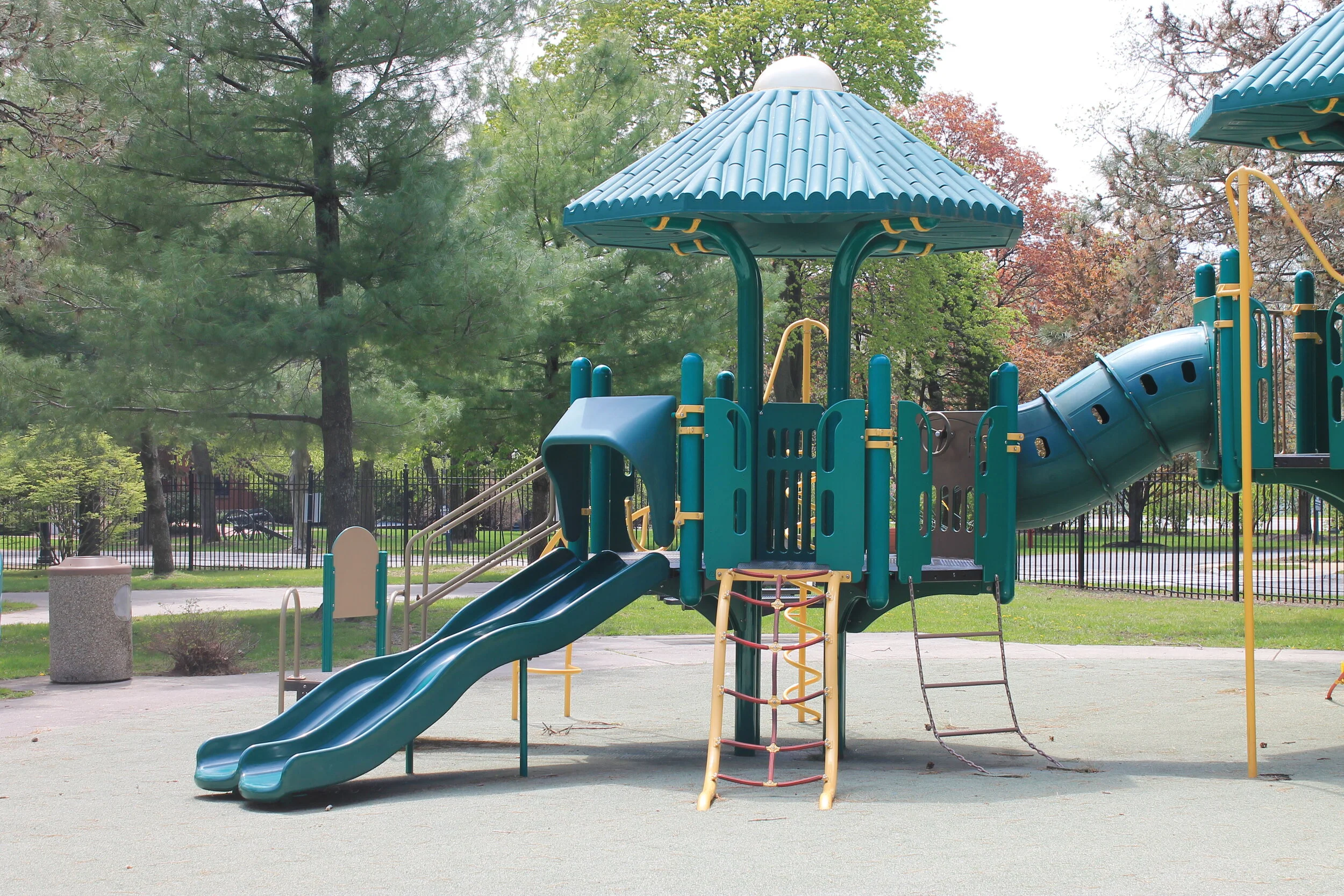
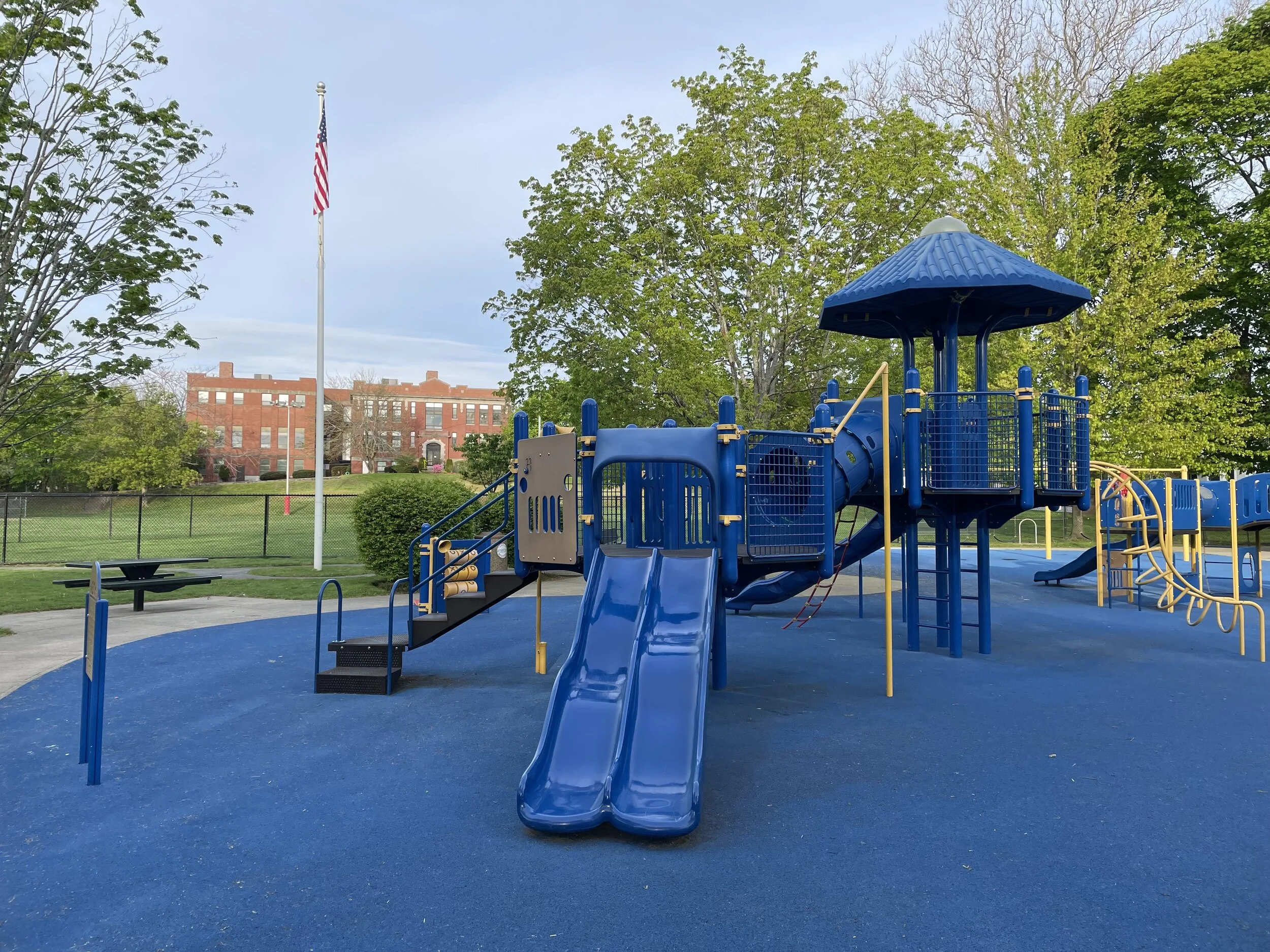
Many of the playgrounds mentioned in this 1925 report, such as Saltonstall and Parker, are still vital parts of the town's recreational landscape today, albeit with updated, modern equipment. However, the mention of people happily bathing and swimming in the Charles River highlights a significant change. 1925 was near the beginning of a period where the river became heavily polluted. For most of the last century, the Charles was considered toxic, profoundly impacting how children could interact with their environment. While a massive cleanup effort has since been undertaken, and the water is far cleaner, the river's past pollution prevents the kind of widespread recreational swimming and bathing enjoyed 100 years ago. This serves as a powerful local example of how environmental factors directly impact early childhood experiences and development, turning a once-popular swimming spot into a historically sensitive ecological area.
Read the full report below: